Official Community Plan
June 22, 2022Cook Street Reconstruction
July 26, 2022
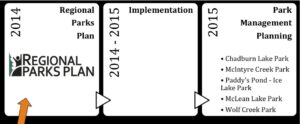
2014 Regional Parks Plan
On June 23rd, 2014, City Council adopted the Regional Parks Plan. The Plan is the result of a comprehensive public consultation process led by John Glynn-Morris General Consulting.
For information on the Plan and consultation process, explore the links below:
The Regional Parks Plan provides a framework to guide decision making including future park management planning by addressing the following questions:
- Why are these Parks important?
- What do we want these Parks to be?
- What do we want these Parks to achieve?
- What needs to happen first?
- What would ‘success’ look like?
- Who will help make this Plan happen and how?
- How should future decisions be made?
The 2010 Official Community Plan (OCP) identified five park areas: Chadburn Lake Park, McIntyre Creek Park, Paddy’s Pond / Ice Lake Park, McLean Lake Park, and Wolf Creek Park.
The OCP describes the rationale for these Parks as:
“Preservation of green spaces for environmental and recreational values is an important part of the vision of Whitehorse. To help make this vision a reality, the Green Space Network Plan shows five park areas for the future residents of Whitehorse to enjoy.” (p.73)
The system of Regional Parks was selected based on input from the public during the development of the OCP in conjunction with other City interests and vacant Commissioner’s Land. These Parks include many things that we value as a community: natural features, recreation facilities, trails, and Environmentally Sensitive Areas as identified in the OCP.
What these ‘Parks’ represent is fleshed out in the Regional Parks Plan. Importantly, the OCP does not identify a vision for these Parks. Section 18.1.1 in the OCP (p.73) specifies: “the City will work with stewards, user groups and interested residents to further define these unique areas within the City, subject to City resources”. Council committed resources for Park Planning in the 2014 Capital Budget.
Whitehorse’s Regional Park system is one of the City’s most valuable assets because it represents the environmental and recreational values which attract people to live, work and play in Whitehorse.
To ensure decisions in the Regional Parks System are made with intention, the City developed the Regional Parks Plan. A ‘systems planning’ approach was employed because it is a practical and holistic way of looking at the entire regional parks network in a wider context by:
- Taking a holistic view of parks and how they work together to achieve objectives
- Having the goal of a system that provides both natural environments for conservation and recreation, and possibly other values
- Facilitates ‘raising the gaze’ to view the big picture at the system level
- Increases efficiency by reducing planning duplication
The systems planning approach is commonly used across Canada and is a precursor to future park-specific management planning.
The Regional Parks Planning process process included:
- Focus on the five Parks as one Regional Parks System
- Involve the public
- Reflect community values, best practices, and creative ideas
- Build on existing City plans including the 2010 OCP, the 2007 Trails Plan, and the 2007 Strategic Sustainability Plan
- Inform future park management planning
- Inform the Parks and Protected Areas Bylaw review
The Regional Parks Planning process did not include:
- Directly address park-specific management issues
- This WILL be addressed during future park management planning
- Review existing Park boundaries as identified in the OCP
- This WILL be addressed during future park management planning
- Review the existing Snowmobile and ATV Bylaws
- Review existing trail planning and development decisions
The Regional Parks Plan provides for Whitehorse’s Regional Parks System a:
- Set of Guiding Values
- Vision
- Goals and Objectives
- Priority Actions
- Desirable Outcomes
- Roles, responsibilities, and partnerships
The Regional Parks Plan was adopted by City Council on June 23, 2014. The process to create the plan was led by John Glynn-Morris General Consulting and involved numerous opportunities for public input. Draft versions of the Plan as well as public input received on those drafts is linked below. All public input is also compiled in the Plan’s Online Appendix.
January:
- Process kick-off
- Background research and project scoping
February:
- Letters sent to governments and key stakeholders: project introduction and invitation for participation
- Meetings by-request from governments and key stakeholders
- Website launched
- Marketing campaign launched
March:
- 1st public engagement event (March 11th): “Why are these areas important?”
- “What we heard” released (March 19th)
- Online engagement tool launched (March 24th)
April:
- “Draft 1: Ideas and options” released for comment (April 7th)
- Public feedback on Draft 1 (May 6th)
May:
- “Draft 2: Ideas and options” released for comment (May 13th)
- Fireweed Market Open House held May 29th. Thanks to all who attended!
- Public input summary
June:
- “Recommended Plan” produced for City staff review
- City Council: Plan introduction (June 16th)
- City Council: Plan adoption (June 23rd)
Public engagement results
In May 2014, Draft 2 of the Plan was released for public input. The input session ended with an event at the Fireweed Market on May 29th. The full results of public input are available. Public input on draft 2 guided changes to the draft, prior to Council review of the Final Draft.
In April, members of the public gathered to discuss the first draft of the Plan. The results are available in a summary table. Thanks to all who participated!
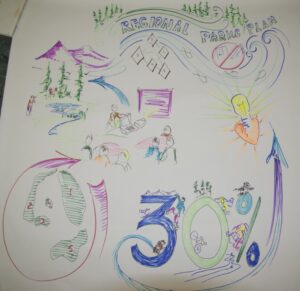
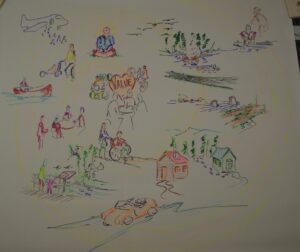
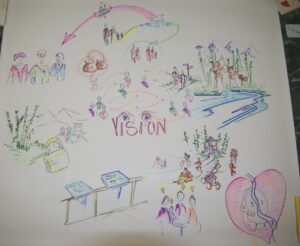
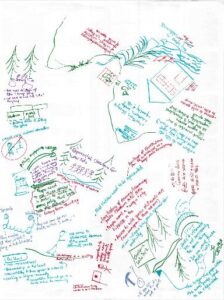
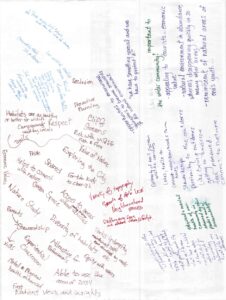
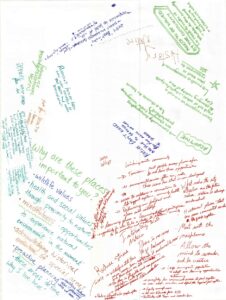
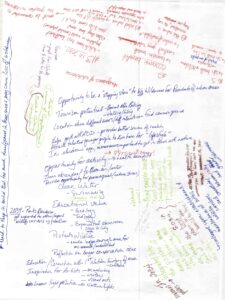
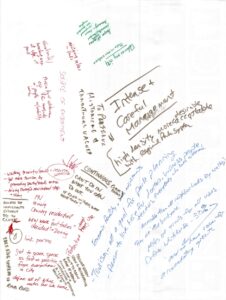
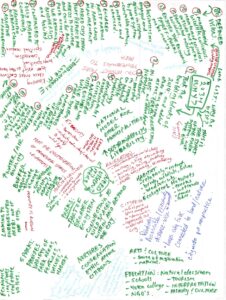
- Graphic Recorder Donald Watt sketches – Note: photos only, digitized images coming soon!