
Living with wildlife
Whitehorse is the Wilderness City. We are surrounded by wildlife even in our own neighbourhoods, which means we all have a duty to manage our waste responsibly. Under the City’s Waste Management Bylaw, no person shall set out waste in any manner or condition that harbours or attracts wildlife. Properly managing your waste and other wildlife attractants is necessary to keep people and animals safe.
What you can do to protect wildlife
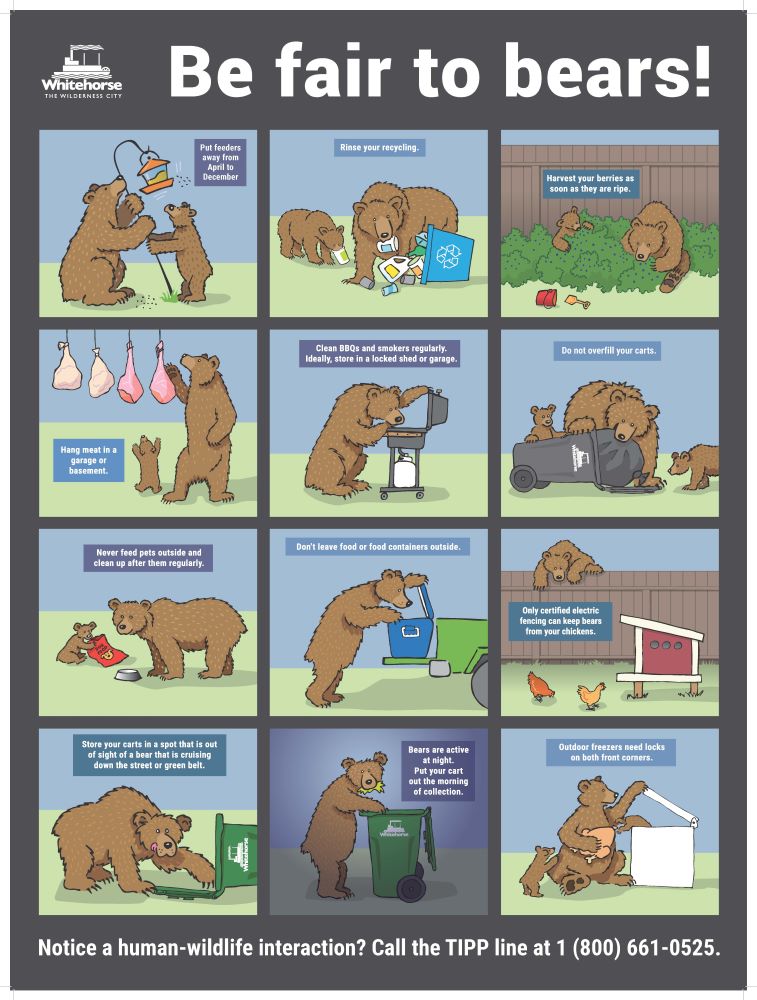
- Do not leave waste outside. The best option is to store organics, garbage, and recycling in a locked shed or garage until collection day
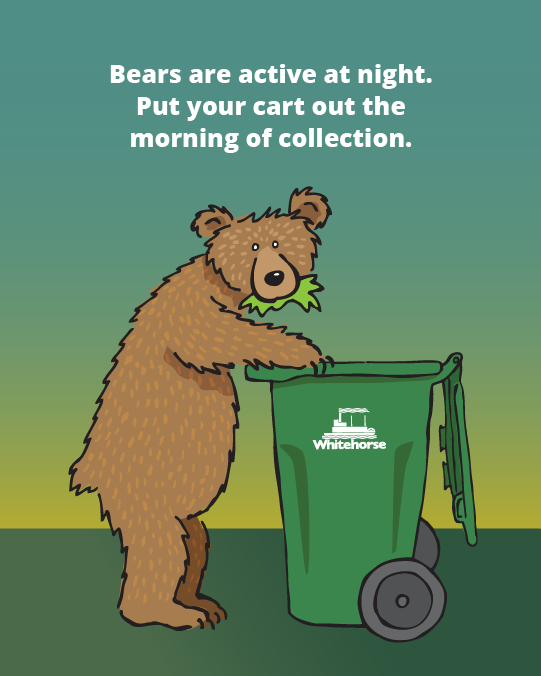
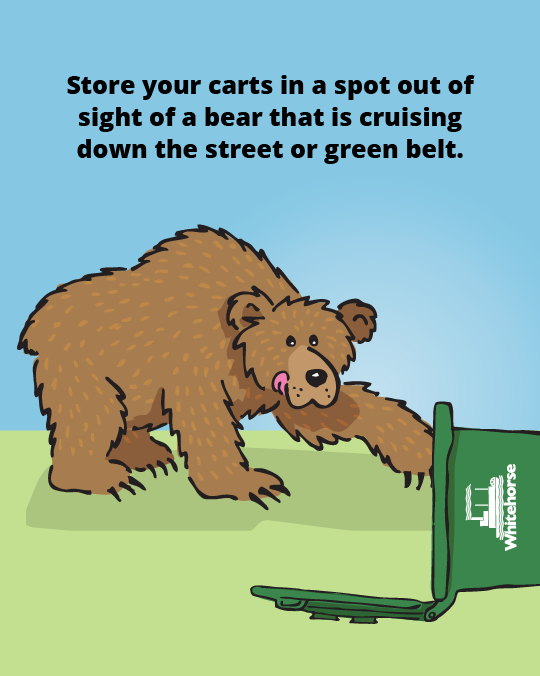
- Put your cart out at the curb on the morning of collection, not the night before
- Request a lock for your business waste bin, and keep it always locked
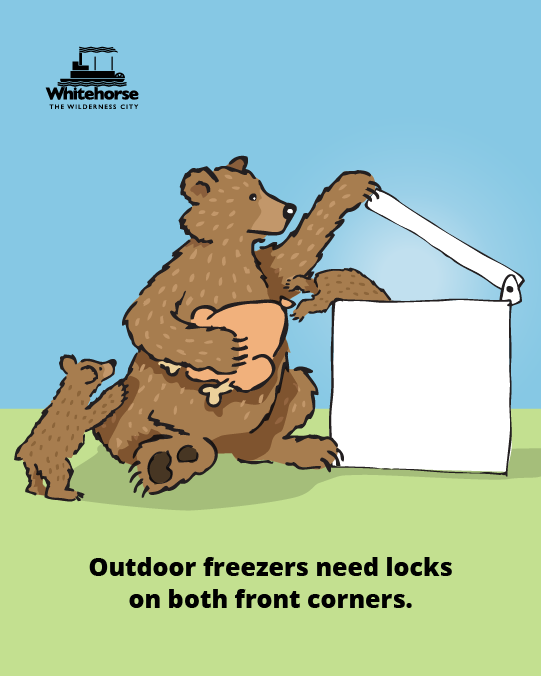
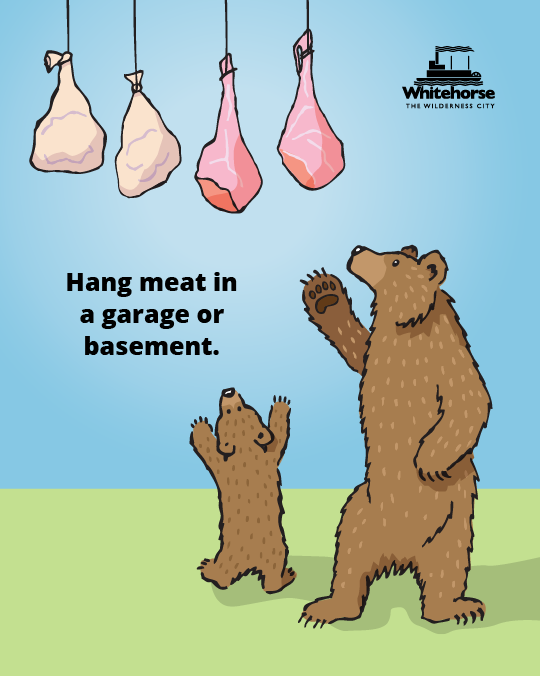
- Store meat and fish in your freezer until organics collection day
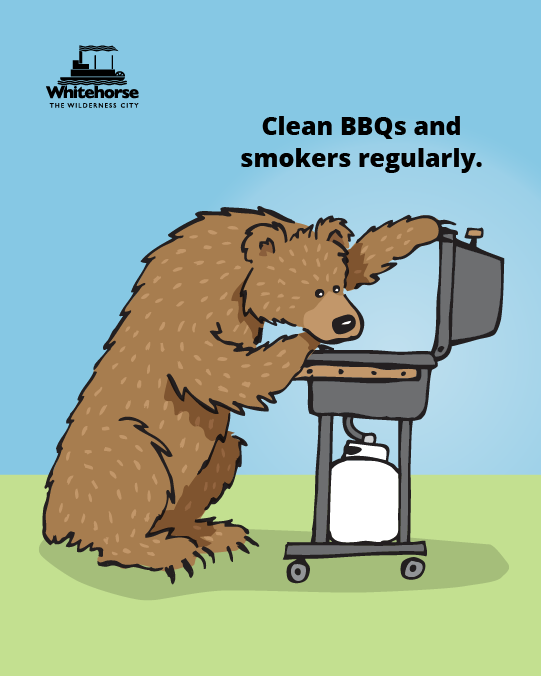
- Clean barbeques, outdoor kitchens and smokers after every use
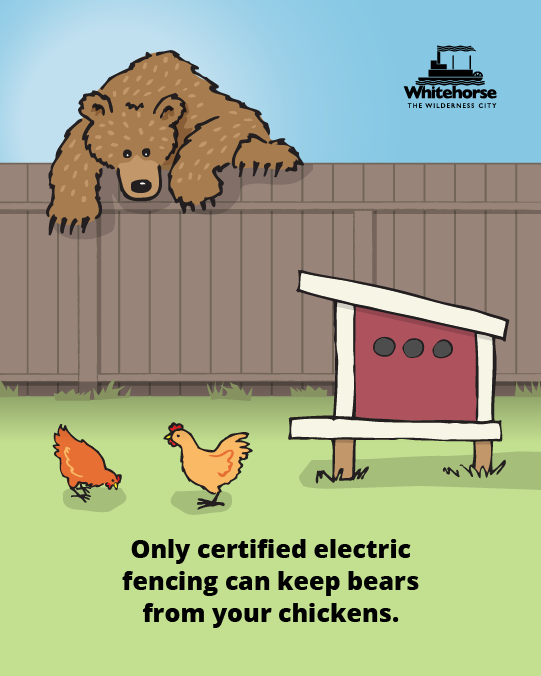
- Install electric fencing around beekeeping, poultry and livestock and keep areas clean of waste
- Don’t put meat, fish, or pet feces into a backyard composter and have the compost in a fenced-in area or wildlife-proof bin
- Take wildlife precautions when skinning or tanning hides in your backyard
- Ensure the preparation, butchering, and processing of legally harvested meat or fish is done within a secured enclosed location to avoid attracting wildlife
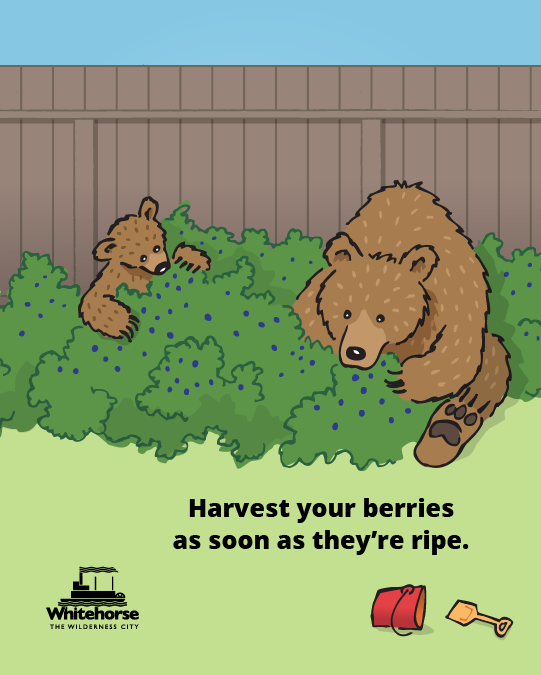
- Pick all fruit from fruiting plants as it is produced
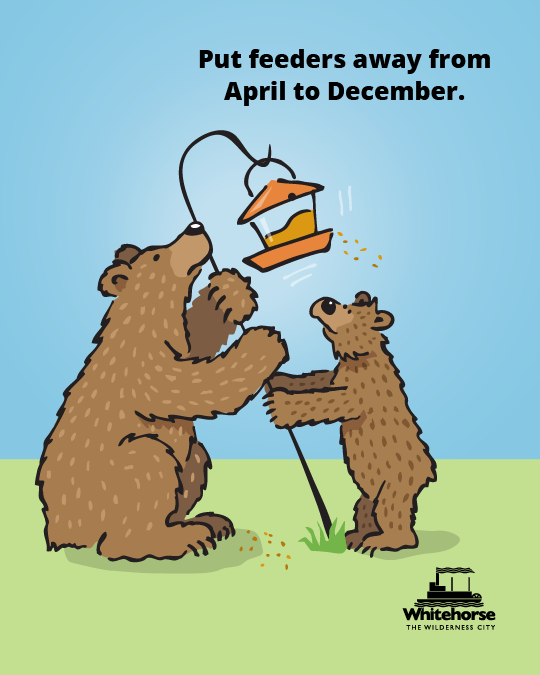
- Put away bird feeders from April – late November
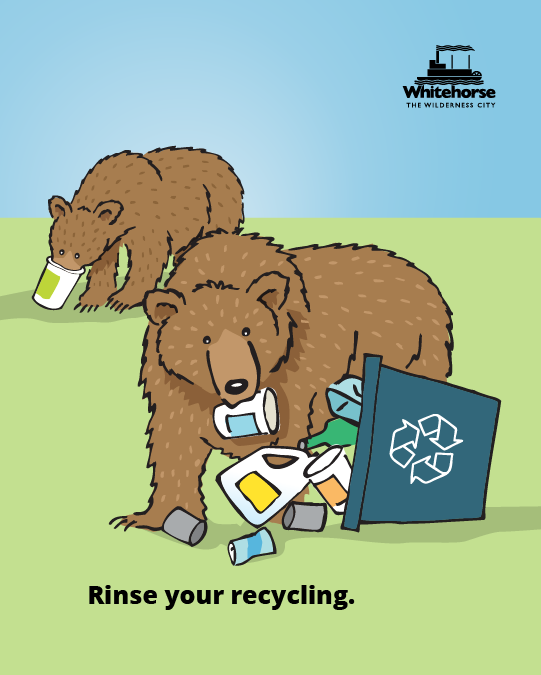

Report illegal dumping to 867-667-2111.
Illegal dumping costs us all! We’ve all seen it: garbage, old appliances, broken TVs, mattresses, and other waste items dumped in the bush.
Help keep Yukon wild by reporting illegal dump sites within city limits with our Report a Problem form.
For dumping sites beyond municipal jurisdiction, please contact Environment Yukon’s TIPP line at 1-800-661-0525.
By developing partnerships, having vigilant community members who report illegal dumping, and developing a strategy to manage the problem, we can see results that help to reduce the incidence of this unacceptable practice. Whitehorse residents and community groups are also working to stop illegal dumping. The City thanks these groups for their hard work and commitment to a cleaner and greener Whitehorse.
Note: Please contact the RCMP at 867-667-5555 if you suspect materials to be explosive or need help identifying explosive materials.
Organic and non-organic waste can attract unwanted wildlife (e.g., bears, foxes, etc.) to your property. Keeping waste locked up inside a building will deter wildlife. Storing any waste – especially organic waste outside is a wildlife attractant. If you are using private collection, ask your service provider to provide a wildlife-resistant container.
One way to reduce your self-haul waste is by having a backyard compost. A backyard compost is a wildlife attractant; therefore, steps need to be taken to deter wildlife.
- Use a bear proof backyard composter
- Add brown materials (e.g., leaves) to reduce smell of food waste
- Do not include meat, fish or pet feces
- Add an electric fence around compost and other wildlife attractants (e.g., fruit tree, berry bushes, vegetable gardens, or chicken coops).
Bears are active from April to November every year. Most human-wildlife encounters result from improper storage of household waste, bird seed and unpicked berry bushes. Once a bear has found an easy meal from a human source, it can become habituated or even dangerous. When they become habituated, they end up being captured or killed as they become a danger to life and property. By practicing responsible waste storage practices all of us help keep bears wild.
The Whitehorse Bear Working Group was founded in 2014. It has representatives from:
- City of Whitehorse
- Government of Yukon’s Department of Environment
- Kwanlin Dün First Nation
- Ta’an Kwäch’än Council
- Grizzly Bear Protection Yukon
- Yukon Fish and Wildlife Management board
The working group is open to additional local governments, Renewable Resource Councils, or other stakeholders joining that want to reduce human-bear conflicts.
In 2015 the group contracted Wind River Bear Institute to assess bear hazards in Whitehorse. The bear hazard assessment can be found here: 2015 Whitehorse Bear Hazard Assessment
For more information on bears, and reducing negative human-wildlife encounters, visit:
- No person shall set out waste in any manner or condition that harbours or attracts wildlife;
- No person shall allow waste to spill over or accumulate on any street or adjoining public or private property and shall ensure, at all such times, that all waste is kept within the waste receptacle with the lid fully closed;
- On collection day, the owner of eligible premises shall set out curb-side waste by 7 am, but no earlier than 6 pm on the evening prior;
- The owner of eligible premises shall, by 11 pm on collection day, return the appropriate cart to, and store it on, the owner’s property in accordance with setback requirements as prescribed in the City of Whitehorse Zoning Bylaw;
- No person shall include meat, fish, pet feces or other non-compostable waste in backyard composting.