




Emergency Management
Emergencies can happen anytime, anywhere and it’s important to be prepared. The City has plans in place for various types of emergencies, and you can also take steps to ensure your household is prepared. By investing time in developing an emergency plan, building your 72-hour kit, and packing a grab-and-go bag, you’ll not only be protecting yourself, but also contributing to the resilience of our community. In times of crisis, individuals who are prepared are better equipped to respond effectively.
Stay informed
Check official sources for information and instructions. This includes government social media accounts and websites.
City of Whitehorse
Facebook and Instagram
Government of Yukon
yukon.ca/emergencies
Wildfire Hub
Flood Atlas
511 Yukon for road conditions throughout the Yukon
Yukon Protective Services on Facebook
Radio stations that may share official messages during an emergency:
CBC 94.5 FM
CKRW 96.1 FM
CHON 98.1 FM
CJUC 92.5 FM
Whitehorse Emergency Preparedness Guide
It’s important to be prepared in the event of an emergency so you can stay focused and act quickly when the time comes.
To help, we’ve created the Whitehorse Emergency Preparedness Guide. You’ll find resources, links and tips for preparing your emergency plan. Download or bookmark (875 Kb PDF)
Earthquakes can happen without warning. Knowing what to do before, during and after an earthquake can help you stay safe and respond quickly.
Join the Great Yukon ShakeOut
On October 15 at 10:15 am, join people around the world for the 2026 Great Yukon ShakeOut and practise what to do during an earthquake. The annual drill is an opportunity to build confidence and make sure you’re prepared before an earthquake happens. The 2026 International ShakeOut Day takes place October 15, with people participating at home, work and school.
Participating is simple. At 10:15 am, take a minute to practice the Drop, Cover, and Hold On steps:
- Drop to your hands and knees.
- Cover your head and neck and, if possible, get under a sturdy table or desk.
- Hold on until the shaking stops.
You can also use the ShakeOut as a reminder to review your household emergency plan, check your emergency kit and talk with your family about what to do during an earthquake.
What to do during an earthquake
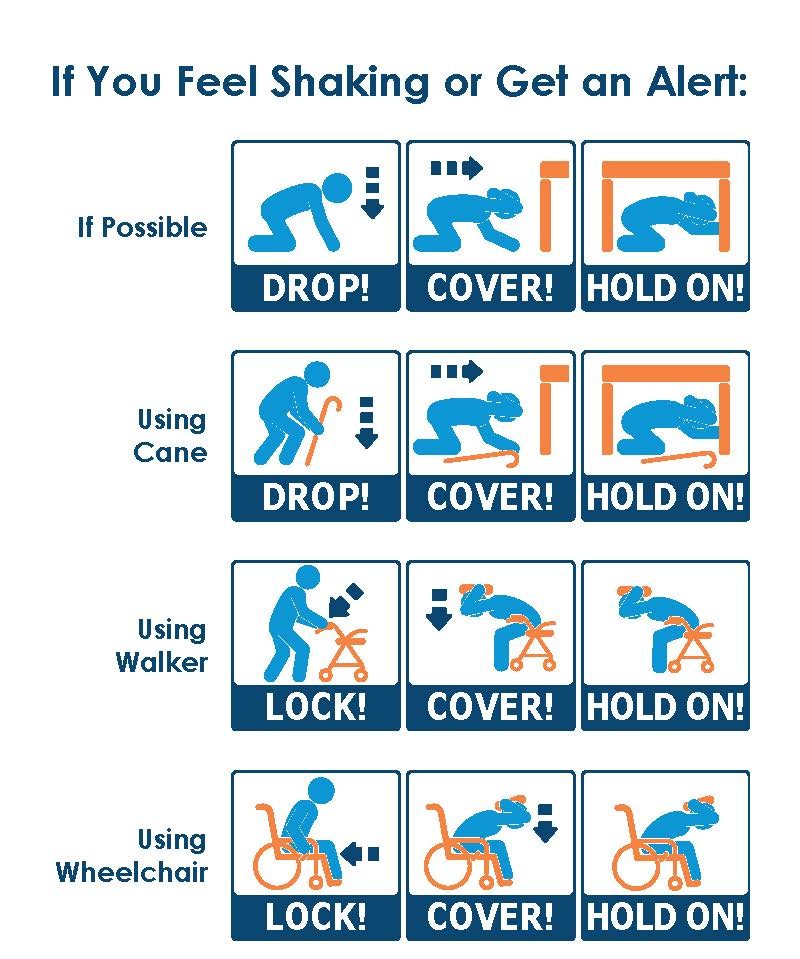
What you should do during an earthquake depends on where you are when the shaking starts. In most situations, Drop, Cover and Hold On are the recommended steps.
If you’re inside
Stay inside while the ground is shaking. Don’t run outside or stand in a doorway.
- Drop to your hands and knees.
- Cover your head and neck. If a sturdy table or desk is nearby, get underneath it.
- Hold On until the shaking stops.
Stay away from windows, exterior walls and objects that could fall.
If you’re outside
Stay outside and move away from buildings and other potential hazards, such as street lights and electrical wires, if you can safely do so. Protect yourself until the shaking stops.
If you’re driving
Pull over in a safe location and stay in your vehicle while the shaking continues. Avoid stopping on or under bridges or near large trees. Once the shaking stops, drive with caution.
If you have accessibility needs
Drop, Cover and Hold On can be adapted to meet different mobility needs. For example, people using a wheelchair or walker may be advised to Lock, Cover and Hold On.
Prepare before an earthquake
Earthquake preparedness doesn’t stop with knowing how to Drop, Cover and Hold On. Take time now to:
- Make and practise a household emergency plan.
- Build and regularly check your emergency kit.
- Identify safe places to take cover at home, work and school.
- Secure items that could fall or move during an earthquake.
- Talk with everyone in your household about what to do if an earthquake happens.
Practising ahead of time can help you act quickly when it matters.
Learn more about ShakeOut events and earthquake preparedness at shakeout.org.
It is important to know what kinds of hazards we face in Whitehorse. Understanding the risks can help you prepare effectively ahead of potential emergencies. Hazards in the Whitehorse area include:
Landslides
A landslide is the sudden movement of soil, rock or debris down a slope, often during the spring snowmelt when the ground is saturated.
Hazardous materials event
A hazardous materials event is the spill or release of dangerous substances into the community.
Wildfires
Wildfires are common in the Yukon from May to September, especially during hot, dry and windy conditions. They can threaten homes, infrastructure, air quality, transportation routes and public safety.
Extreme weather events
These events include heatwaves and cold snaps and can affect power, transportation, communications, water systems and more.
Floods
Floods can occur in the spring and summer due to rapid snowmelt and ice jams, affecting homes, roads, infrastructure and essential services.
Road closures
Road closures may occur due to wildfires, landslides, flooding, or other events, disrupting travel, emergency response and access to goods and services.
Telecommunications outages
Telecommunications outages can occur during emergencies or as standalone events, disrupting internet and phone services.
Structural fires or explosions
Large-scale structural fires or explosions may force temporary evacuations, disrupt services, and restrict access to roads or facilities.
An emergency plan is a document that outlines what you and the people you live with will do in the event of an emergency. Having a plan for what to do, where to go, and who to reach out to will reduce stress and help keep everyone safe and focused.
Get together with your household and develop your emergency plan. Make sure everyone understands what to do if an emergency happens.
Everyone in your household should have access to your plan in case you get separated. Remember that cell phones and the internet might not work during an emergency.
There are many guides for creating an emergency plan. Here are a few to get started with:
- Yukon Government’s Make an Emergency Plan
- Government of Canada’s Make an Emergency Plan
- Government of Canada’s Emergency Preparedness Guide for People with Disabilities/Special Needs
- Yukon Government’s Make an Animal Emergency Plan
Once you’ve created your emergency plan, make sure to keep it in an easy-to-find and easy-to-remember place that everyone in your household is aware of. Since an emergency can occur anytime, anywhere, it is also a good idea to keep copies of your plan in your vehicle(s), at your workplace, and on your computer and phone. Review your emergency plan every year with your household to refresh your memory and ensure that it is up to date.
Put together an emergency kit and keep it somewhere easy to find. Keep your kit in a backpack, suitcase, or tub that is light enough to carry. Make sure to always keep your vehicle’s fuel tank at least half full.
Items to put in your emergency kit
- 2 litres of water per person per day, for a minimum of 3 days
- A copy of your emergency plan, including emergency contact numbers
- Prescription record from your pharmacist
- Minimum 3-day supply of non-perishable food per person (replace yearly)
- Change of clothing, including extra warm clothing (hat, mittens, socks)
- Extra set of keys for your vehicle
- First aid kit
- Flashlights for each family member
- Battery-powered radio and extra batteries, or wind-up radio
- Copies of important documents (birth certificates, passports, insurance and bank records)
- Pet food and water, leash, collar, a kennel or crate, and medicine if necessary
- Cash in small bills
Items to remember
- Wallet (identification, credit or debit cards and cash)
- Cell phone and charger
- Prescription glasses and contacts
- Medications
- Keys for your vehicle
Additional supplies to consider
- Candles and matches or lighter
- Toiletries and personal hygiene items
- Hand sanitizer, toilet paper and garbage bags
- Books or toys for children
- Basic tools and duct tape
- Camping supplies such as a tent and a camp stove with fuel
- Blankets or sleeping bags
- Extra warm clothes (warm pants, sweaters, jackets)
- Small battery bank
- Laptop and charger
For more information about building an emergency kit, visit:
- The Government of Canada’s Emergency Kit Checklist
- The Government of Yukon’s Make an Emergency Kit page
- The Canadian Red Cross Build an Emergency Kit page
You will be informed of a local emergency as early as possible through official government channels and local media. Depending on the emergency (e.g., in the event of a telecommunications outage) you may be informed through physical signs or direct contact.
Listen to information from official sources, stay informed as the situation evolves and share important messages with your neighbours. Follow instructions from local authorities.
Types of Emergency Notifications
There are 3 types of notifications that you may receive.
Shelter-in-Place
- Shelter-in-place means staying inside or finding a safe indoor location during an emergency. This action helps protect you from outdoor hazards until the situation is resolved.
Evacuation Alert
- An evacuation alert means you must be ready to leave on short notice. Leaving during this stage is considered a voluntary evacuation.
Evacuation Order
- An evacuation order means you are at immediate risk and must leave the area right away. Local authorities or the RCMP enforce this mandatory evacuation, which may be issued without an alert if there is not enough time to warn residents.
If you’ve received an Evacuation Order, follow these steps before leaving your home:
- Gather your household members, review your emergency plan and grab your emergency kit.
- If you have a vehicle and can offer a ride to a neighbour, please do so.
- Follow travel instructions included in the evacuation order. Guidance will be provided for those with access to a vehicle and for those requiring transportation assistance.
In an emergency, your greatest resource might be just next door. Creating a support network with your neighbors is an important step to take when you’re creating an emergency plan. Connecting and building relationships with them today can mean a better response for everyone in the event of an emergency.
There are many guides for creating an emergency neighbourhood support network. Here are a few that you can base your own on:
- PreparedBC’s In It Together: Neighbourhood Preparedness Guide
- City of Surrey’s Neighbourhood Emergency Preparedness Guide
- Comox Valley Regional District Neighbourhood Emergency Preparedness Program Guide
- City of Brampton Neighbourhood Emergency Preparedness Guide and Emergency Plan Template
A neighbourhood emergency support network can look different for every area, but in general they will work together to develop: a safe meeting place, contact lists and a phone tree, and responsibility lists. They can also include a list of neighbours with unique needs and a list of who has skills and resources that may be useful in an emergency.
When neighbourhoods are prepared, individuals are all more resilient in the face of an emergency.
Emergencies can happen at any time, including during the winter months. Taking these few simple steps now can help your household stay safe and prepared for winter emergencies:
• Ensure that any heating appliance air intake or exhaust ports are clear of snow and ice
• Keep your home safe by having annual inspections of heating appliances prior to the winter season. A wood stove, even if only used for back-up heating, needs an annual inspection by a qualified technician
• Add back-up light sources to your emergency kit (or check on the ones you’ve already stashed). This can include flashlights (battery powered or hand-crank), lanterns (battery powered), headlamps and candles (with matches or a lighter)
• Add warm clothing and blankets to your emergency kit
• Test your smoke alarms and carbon monoxide detectors regularly
In the event of a power outage, do not use outdoor barbeques or heating devices inside your home or garage. If you have an emergency gasoline-powered generator, keep it well away from doors and windows to prevent carbon monoxide from entering your home.
Emergency Management Plan
A guiding document to provide the earliest possible coordinated response in order to protect the community.